Rohit Sharma, Centuries Runs and Key Records
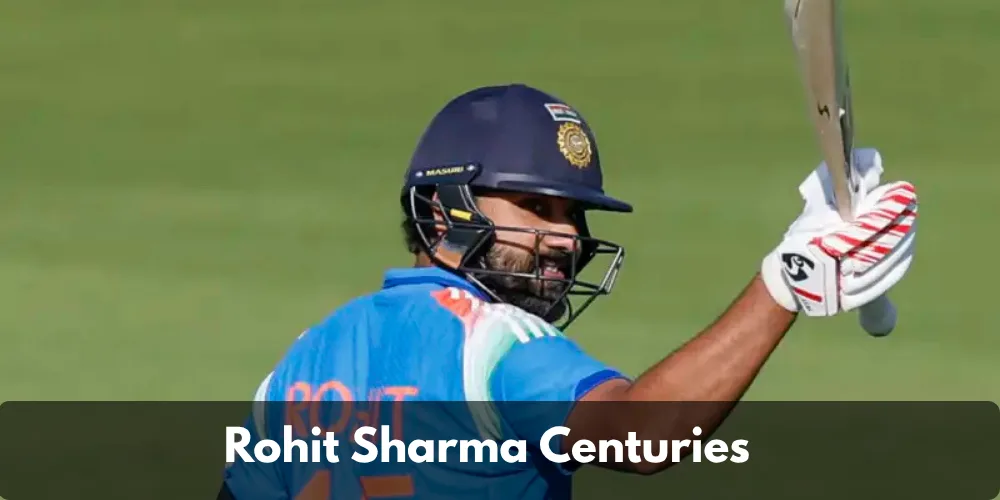
Rohit Sharma’s career numbers underline his standing as one of India’s leading modern-day batters: 4,301 Test runs, 12,120 ODI runs and 4,231 T20I runs through 3 October 2026. His record is defined by exceptional white-ball longevity, three ODI double-centuries, a highest ODI score of 264, five hundreds at the 2019 ICC Cricket World Cup and major achievements as India captain.
In the IPL, he combined significant runs with five title-winning campaigns as Mumbai Indians captain.
Rohit Sharma’s international batting record
The following figures cover Rohit Sharma’s international career through 3 October 2026. They demonstrate the differences between his three formats: a strong Test average built around 12 hundreds, a highly productive ODI record over nearly 300 matches, and a substantial T20I contribution that ended after India’s 2024 T20 World Cup triumph.
| Format | Matches | Runs | Average | Hundreds | Fifties | Highest score |
| Tests | 67 | 4,301 | 40.57 | 12 | 18 | 212 |
| ODIs | 291 | 12,120 | 49.26 | 35 | 63 | 264 |
| T20Is | 159 | 4,231 | 32.05 | 5 | 32 | 121* |
The ODI figures are particularly notable because they combine volume and consistency. Rohit crossed 12,000 runs in men’s ODIs in September 2026, becoming the third Indian to reach that landmark after Sachin Tendulkar and Virat Kohli, according to the ICC. His average of 49.26 across 291 matches illustrates how often he converted starts into influential scores across a long international career.
ODI numbers and the double-century record
Rohit’s identity as an ODI batter rests heavily on his ability to construct long innings and then accelerate dramatically. His highest score of 264 remains the highest individual score in an ODI. The innings came against Sri Lanka at Eden Gardens in 2014, after which he had already established himself as one of India’s key opening batters.
He holds the record for the most ODI double-centuries, with three. That achievement matters because it reflects more than one extraordinary day: it required the patience to bat deep into a 50-over innings and the power to maximise the final overs. Rohit’s 209 against Australia in Bangalore was part of a 2013 series in which he scored 491 runs in six outings, according to Cricbuzz.
His ODI transformation followed a move to the top of the order. Earlier in his career, he had moved in and out of the side while batting in the middle order. Opening gave him more time to settle, assess conditions and build an innings. His partnership with Shikhar Dhawan was an important feature of India’s successful 2013 ICC Champions Trophy campaign.
For readers assessing player roles in limited-overs contests, an opener’s opportunity to face a large share of deliveries is important context alongside career totals. Matchups, venue conditions and batting position can shape projections, which is why resources discussing dream11 prediction often focus on a player’s likely role rather than relying only on headline numbers.
World Cup milestones in the 50-over format
Rohit’s 2019 ICC Cricket World Cup remains one of the standout individual batting campaigns by an Indian player in the tournament. He finished as the leading run-scorer with 648 runs from nine matches at an average of 81. The tally included 67 fours, 14 sixes and five centuries.
Those five hundreds set the record for the most centuries in a single Cricket World Cup. Across men’s Cricket World Cups, he has seven centuries, another record associated with his ODI career. Such tournament performances helped explain why his record is often viewed through the lens of big-event batting as well as bilateral series output.
In the 2015 ICC Cricket World Cup, Rohit scored 330 runs for India, including a century in the quarter-final against Bangladesh and two fifties. The two campaigns show an evolution from an important member of India’s batting group to the central run-maker of the 2019 side.
Test career: debut impact and later development
Rohit made his Test debut against West Indies at Eden Gardens in November 2013 and immediately scored 177. He followed it with an unbeaten 111 in the next Test at Wankhede Stadium. Those early innings made a compelling case for his red-ball ability, although his Test career subsequently included periods outside the side and questions around performances in overseas conditions.
His eventual Test record was 4,301 runs from 67 matches at an average of 40.57, with 12 centuries and 18 fifties. His highest score, 212 against South Africa in 2019, was his first Test double-century. It also marked a productive period after he established himself as an opening batter in the format.
Another key Test milestone came at The Oval in 2021, where he made 127 against England for his first overseas Test hundred. In the 2021 home series against England, he scored 345 runs at an average of 58, including 161 in Chennai. These innings helped add depth to a Test record that began with spectacular home success and later included important contributions in different conditions.
Rohit announced his retirement from Test cricket in April 2025. His last Test was against Australia in December 2024, so his final Test numbers remain fixed at 67 matches, 4,301 runs and 12 hundreds.
T20I runs, centuries and retirement
In T20 Internationals, Rohit scored 4,231 runs in 159 matches at an average of 32.05. He made five centuries and 32 half-centuries, with an unbeaten 121 as his highest score. He shares the record for the most T20I centuries with five, while the ICC also notes that he became the first batter to hit 200 sixes in T20Is.
His T20I career began in 2007 during the inaugural ICC World Twenty20. Called in as a replacement for an injured Yuvraj Singh, he made a half-century against South Africa at Kingsmead. India won that tournament, giving Rohit an early taste of global success.
His final T20I appearance came in the 2024 ICC Men’s T20 World Cup final against South Africa. India won the tournament under his captaincy, and Rohit retired from T20Is after the victory. The ICC credits him with 49 victories as India’s T20I captain, a significant part of his leadership record in the format.
IPL runs and Mumbai Indians leadership
Rohit’s IPL story began with Deccan Chargers, for whom he played from 2008 to 2010. Cricbuzz records that he scored more than 350 runs in each of those three seasons. Those consistent early IPL performances helped him remain prominent during a period when his international place was not always secure.
He joined Mumbai Indians in 2011 and became captain during the 2013 season. That year, he scored 538 runs and Mumbai won their first IPL title. Under his captaincy, Mumbai Indians went on to win the IPL in 2013, 2015, 2017, 2019 and 2020.
Five titles made Rohit joint-most successful IPL captain alongside MS Dhoni. His contribution to Mumbai was therefore not solely statistical: he shaped a side that repeatedly succeeded in the tournament’s most demanding stages. Mumbai Indians replaced him as captain ahead of the 2024 season, with Hardik Pandya taking the role, but Rohit remained with the franchise and was retained before the IPL 2025 mega auction.
A career shaped by adaptation
Rohit Sharma’s records show how strongly his career was shaped by adaptation. He began as a middle-order batter, became an ODI opener, developed into a Test opener, led India across formats and later continued as an experienced presence after captaincy changes. His highest scores and century totals capture the scale of his ability, while the progression of his career explains the durability behind them.
From the 264 in ODIs to five World Cup hundreds in 2019, a Test double-century and five IPL titles as captain, Rohit’s numbers are connected by a consistent theme: he made his biggest impact when given time, responsibility and a defined role at the top of the order.